Upholstery course: day two

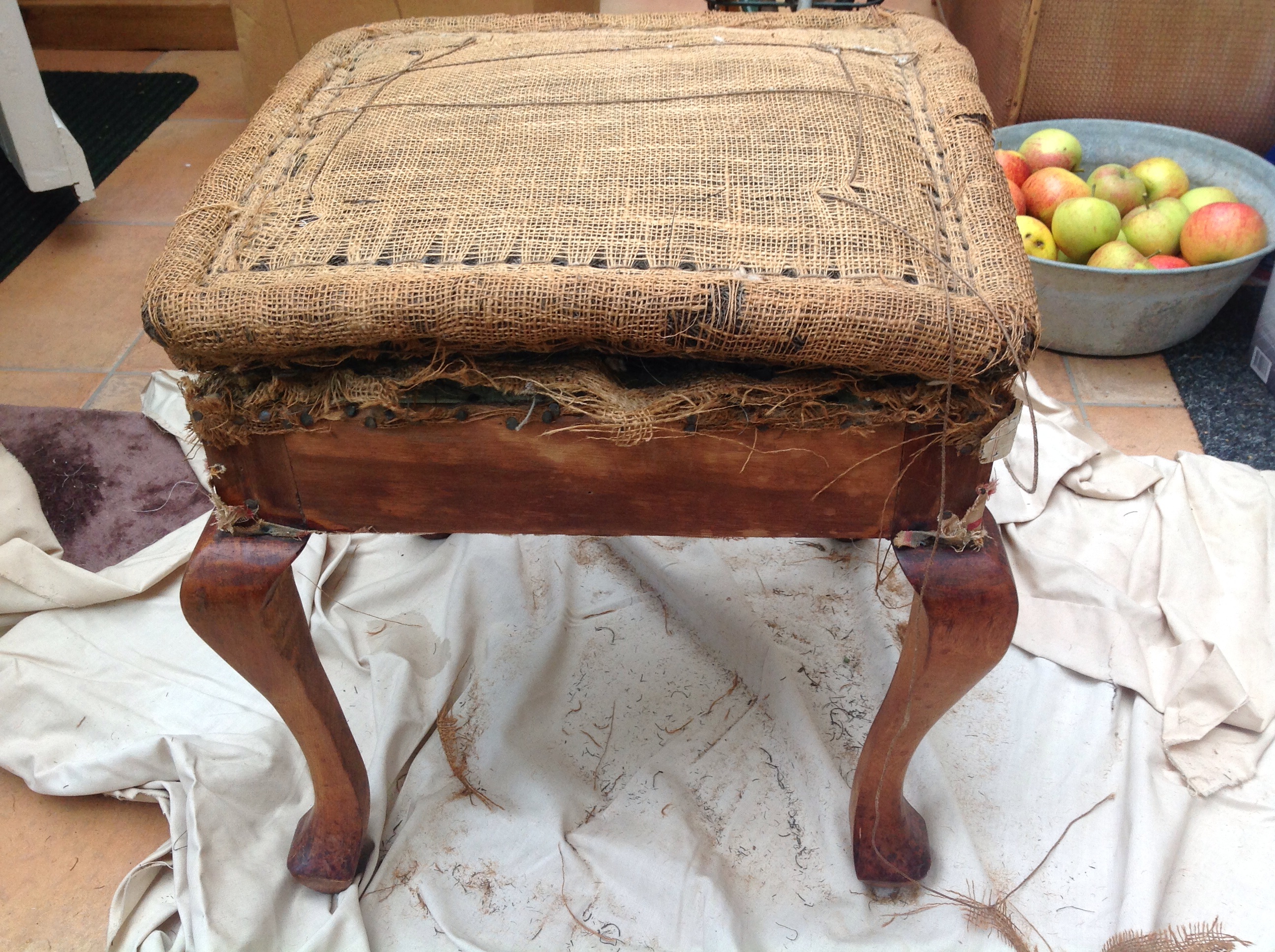
This is a progress update on the small stool I began re-upholstering last year (well, dismantling more like)!

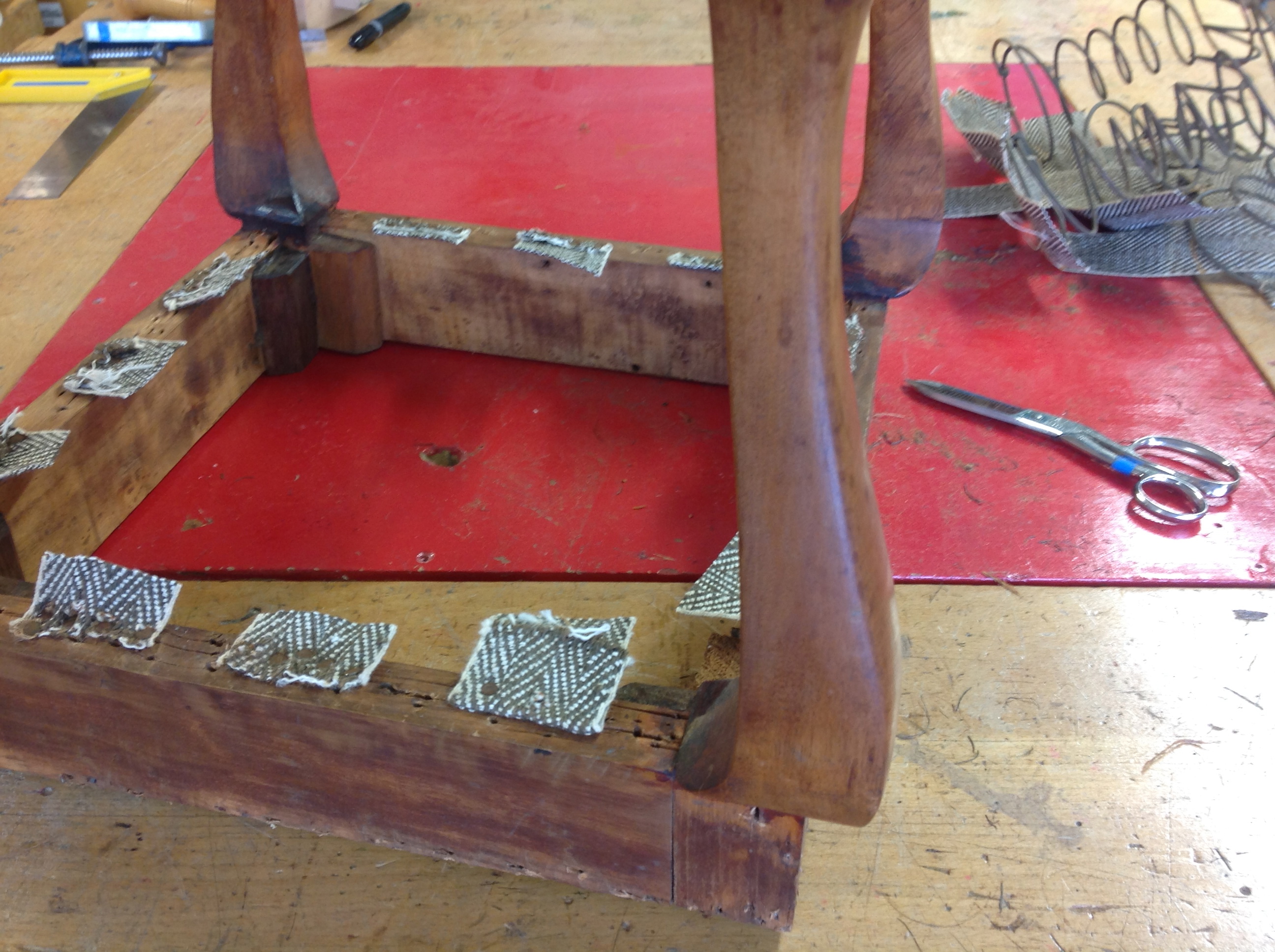
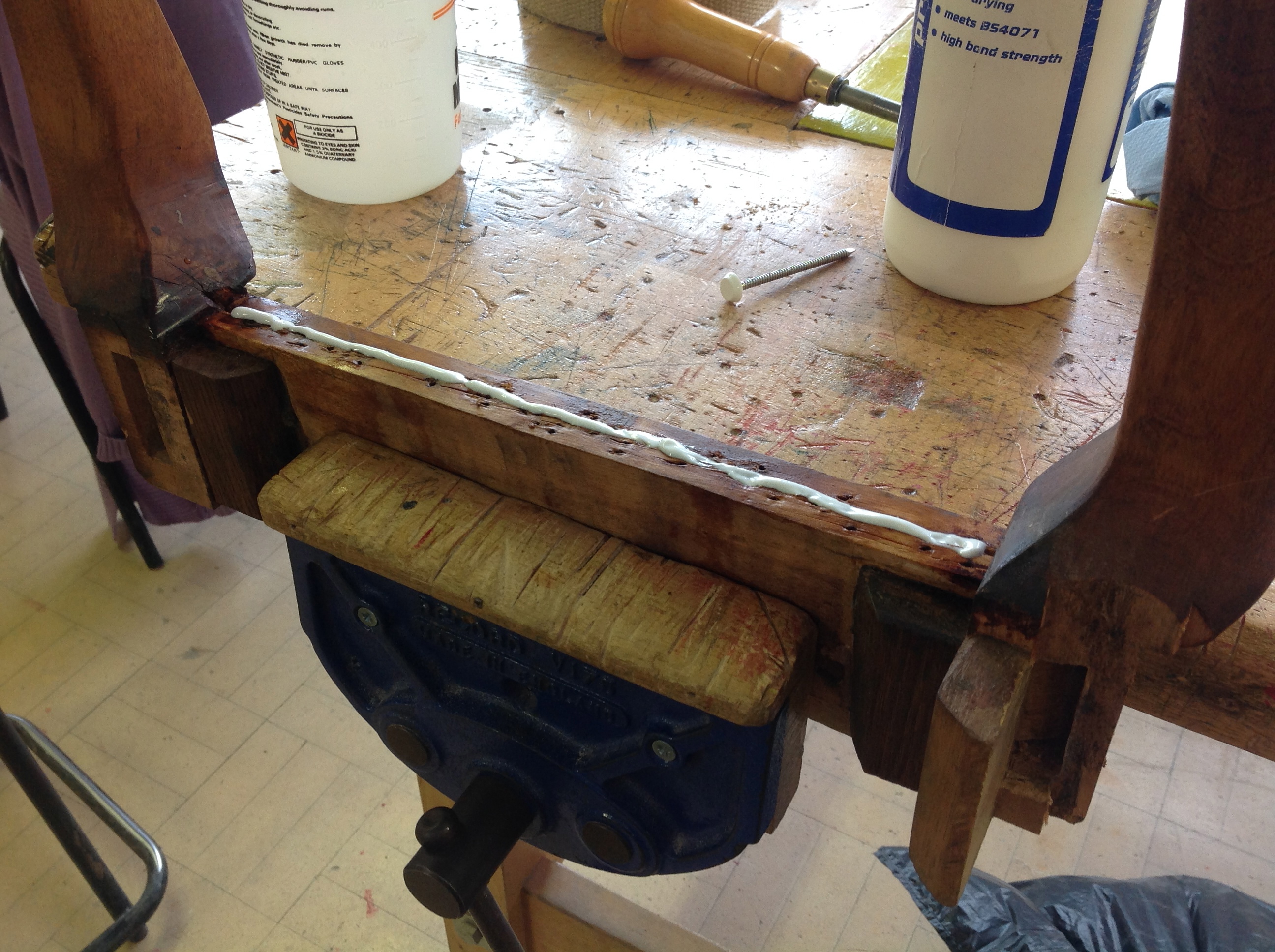
I realised quite quickly that we had stapled the webbing to the wrong side of the chair last time round (fine if you are planning to build the seat up without springs – not so good if you have old springs to replace). So I began by taking off the webbing, cleaning up the woodwork and reapplying the webbing to the correct (under)side.

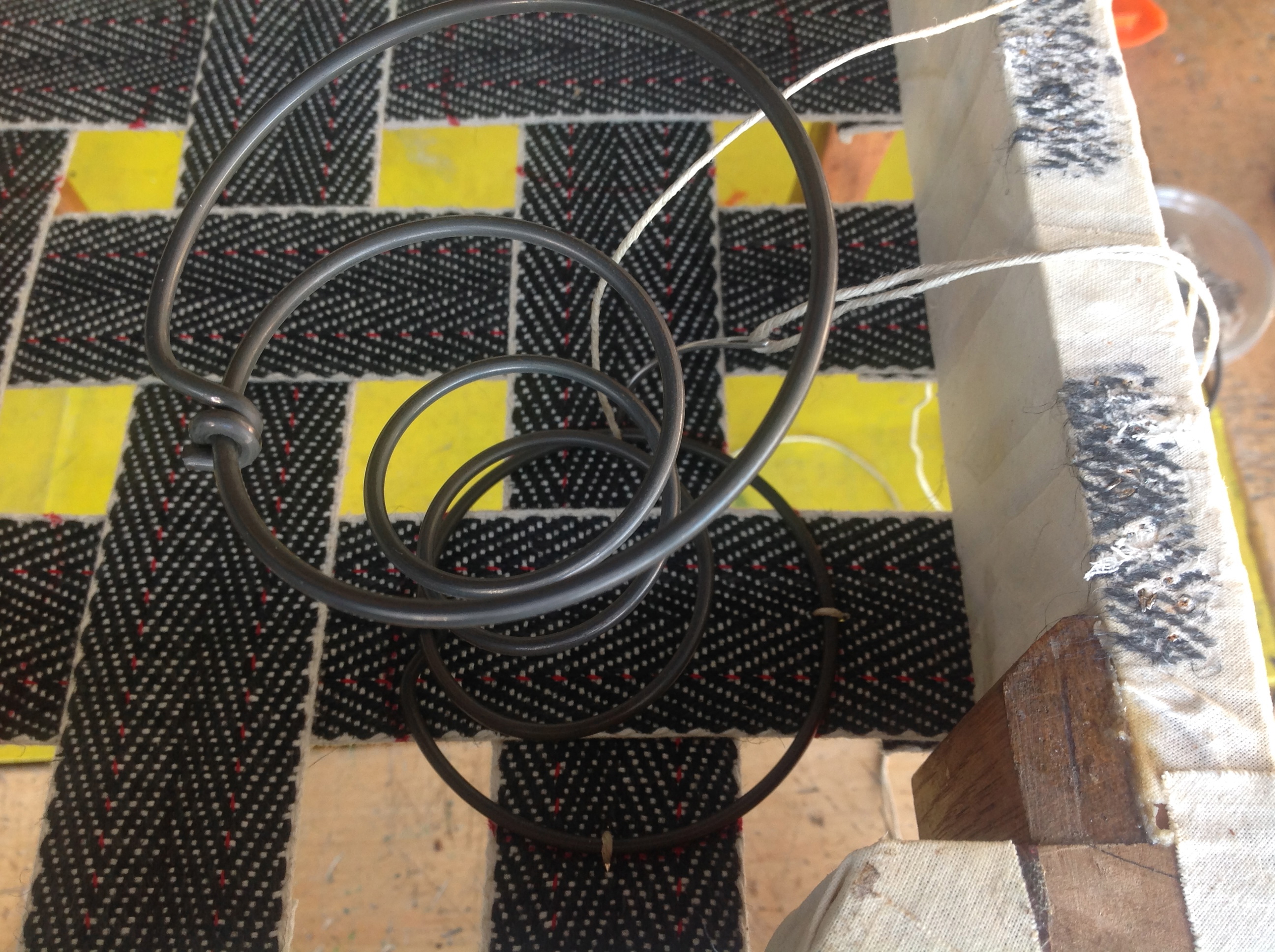
Next it was time to hand sew the springs to the webbing and create a sprung unit from the five springs by coercing them together with string. Then I nailed a layer of hessian to the frame – over the top of the springs – and hand sewed the springs under the fabric by ‘feel’.

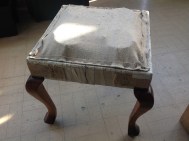
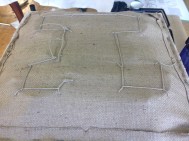
That took most of the morning which meant the afternoon was spent hand sewing little cord pockets for the synthetic filling which would be tucked in to create part of the seat padding. The final step was to add another piece of hessian and secure with temporary tacks.

IMG_3719 IMG_3721 IMG_3723 IMG_3726 IMG_3733 IMG_3735IMG_3736 IMG_3738 IMG_3741 IMG_3742 IMG_3746 IMG_3751

This is as far as I got in seven hours. I am hoping that one more course day may bring me closer to the actual fabric cover! SCH
Auction and flea market buys

A quick dash into town to do a bit of Christmas shopping between bids was not a smart move today! I got back just as the auctioneer was closing on three fantastic square wicker bread baskets… so frustrating!

But I did mange to get a painted table that will look good once re-painted in a lighter colour – it was a crazy £3 (£2 is the starting price); there were no other bidders. I also managed to get a piano stool without a seat for a future renovation project at The Little Grange that came with two chairs – the whole lot was a cool £10 before commission.

IMG_3665  IMG_3664

I remember too that a few weeks ago I went to an indoor flea market and picked up three very handsome prints in gold frames for £5. SCH

This week’s auction highlights

Definitely a week that ticked all the boxes!

The normally crammed auction hall was quieter than normal which meant the demand for furniture and sundries wasn’t that high which in turn meant some items were making silly money! At the same time there was a catering auction in an adjacent barn which I thought might be interesting in terms of equipment for the kitchen at The Little Grange: it’s usual to find stainless steel work stations, fridges, freezers, cookers, professional knives, industrial mixers, bulk crockery, glass ware and serving dishes.

Auction successes included:

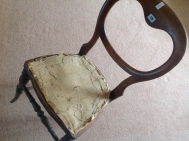
– A ballon-back chair for renovation (with webbing and hessian only). The perfect re-upholstery project once I’ve finished the little stool.

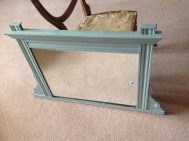
– A painted wall mirror.

– A selection of wine glasses and baking dishes as well as a range of board and word games including Cleudo, Jenga, Brainbenders, draughts, playing cards, etc.

– A Kilner enamel jam pan with handle.

I paid just over £14 each for the chair and box of sundries; £12 for the mirror and £18 for the jam pan. SCH

IMG_2532  IMG_2530  IMG_2542 IMG_2538

Fabric-covered foam cushions for the Adirondack chair

I am happy to report that I have finally finished the two seat cushions for the outside chair I began at the beginning of the summer! It wasn’t the mission I had envisaged and of course, afterwards, I wondered why it had taken me so long to get round to finishing them.

Measuring the chair was the first task. I took care to make sure the repeat in the fabric to the front of the arched back matched the sides (it would be easy to cut a piece from the same fabric – in the same direction – only to find it ran the wrong way when viewed from the side). To do this I had to cut two strips along the length of the fabric (vertical) thus creating a seam from front to back along the top of the cushion.

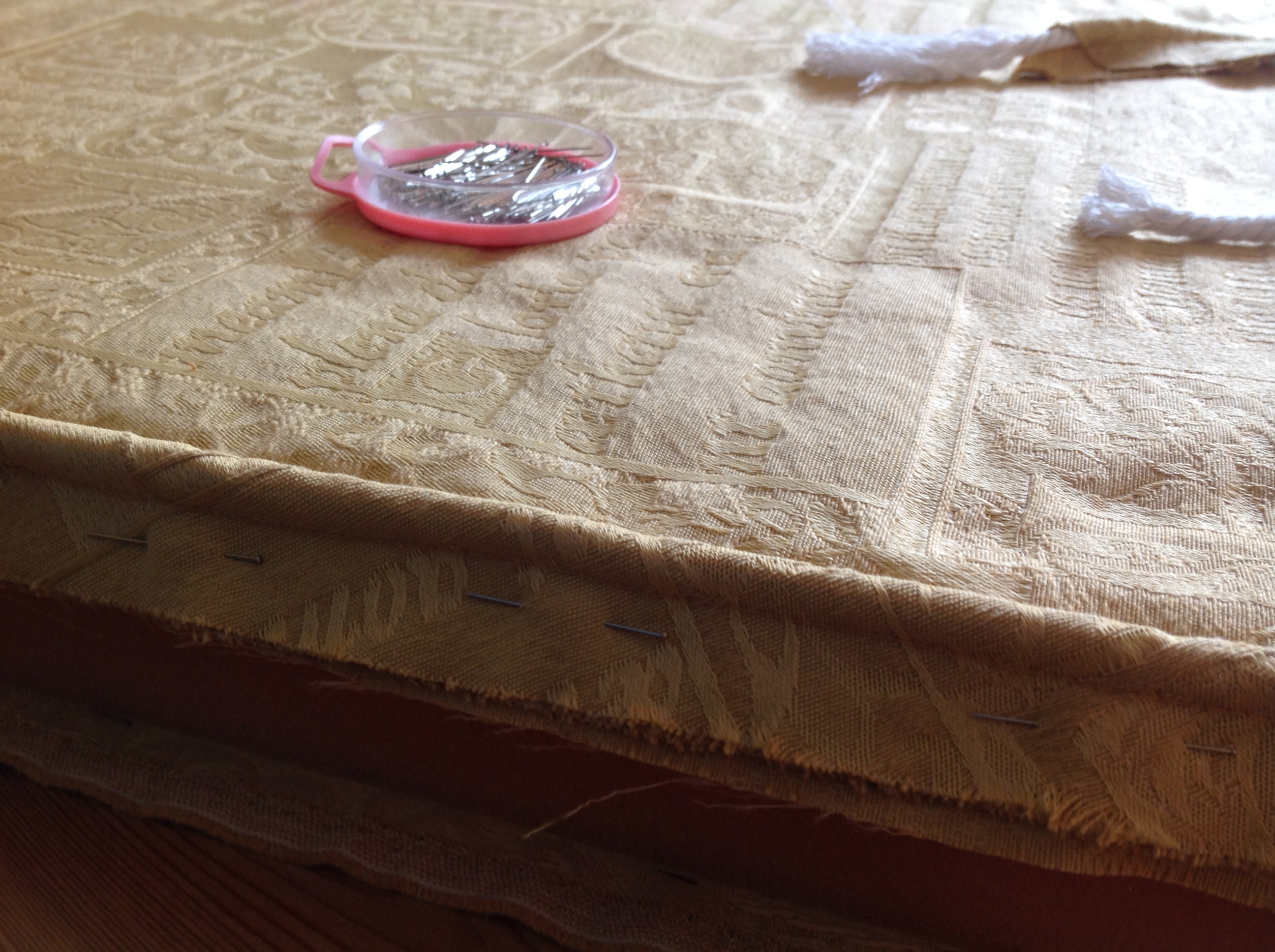
Next I made up the correct length of piping using strips of fabric cut on the bias and piped through with cord. I sewed the piping to the front panels of each cushion before attaching the zips on the relevant rear/bottom panels. Next I sewed the side panels to the front panels (enclosing the piping).

Once the front panels were finished I sewed the remaining piping to the back panels, opened the zips (important!) and then sewed the front sections to the backs (again encasing the piping).

At each step I pinned the fabric in place around the foam and then took out the foam and sewed the pieces in place with my sewing machine. When it came to sewing the front to the back, the zip needed to be open so I could easily fold and remove the foam before sewing the final pieces in place.

Here are a few pictures of work in progress and the finished result:

IMG_2457  IMG_2456  IMG_2450  IMG_2458

It’s just a shame I didn’t manage to finish the cushions before Autumn set in. SCH

Busy sewing bee

I joined a dressmaking course last month to help me tackle some of the sewing and upholstery projects I have lined up. I will generally have a go at most things but sometimes feel I am missing the basics and would like some formal instruction. By joining the class I hope to perfect different types of seams, get a better understanding of what my sewing machine can do, learn new techniques for making projects look more professional and generally learn the tips of the trade.

IMG_2296

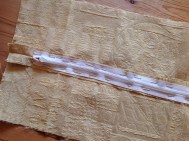
Sample course work: concealed zip

Each week we are covering different seams and basic sewing skills. So far we have sewn a straight seam, French seam, jean seam, corner seam, facing, round and pointed collars, and put in a dart using tailor’s tacks. We have also looked at general machine use, measuring and cutting out fabric, seam allowances, pressing out seams and troubleshooting. During this week’s class we went through the process of adding a zip to a skirt – using both machine and hand tacking, a close top stitch and a ‘quick unpicker’ to reveal the concealed zip.

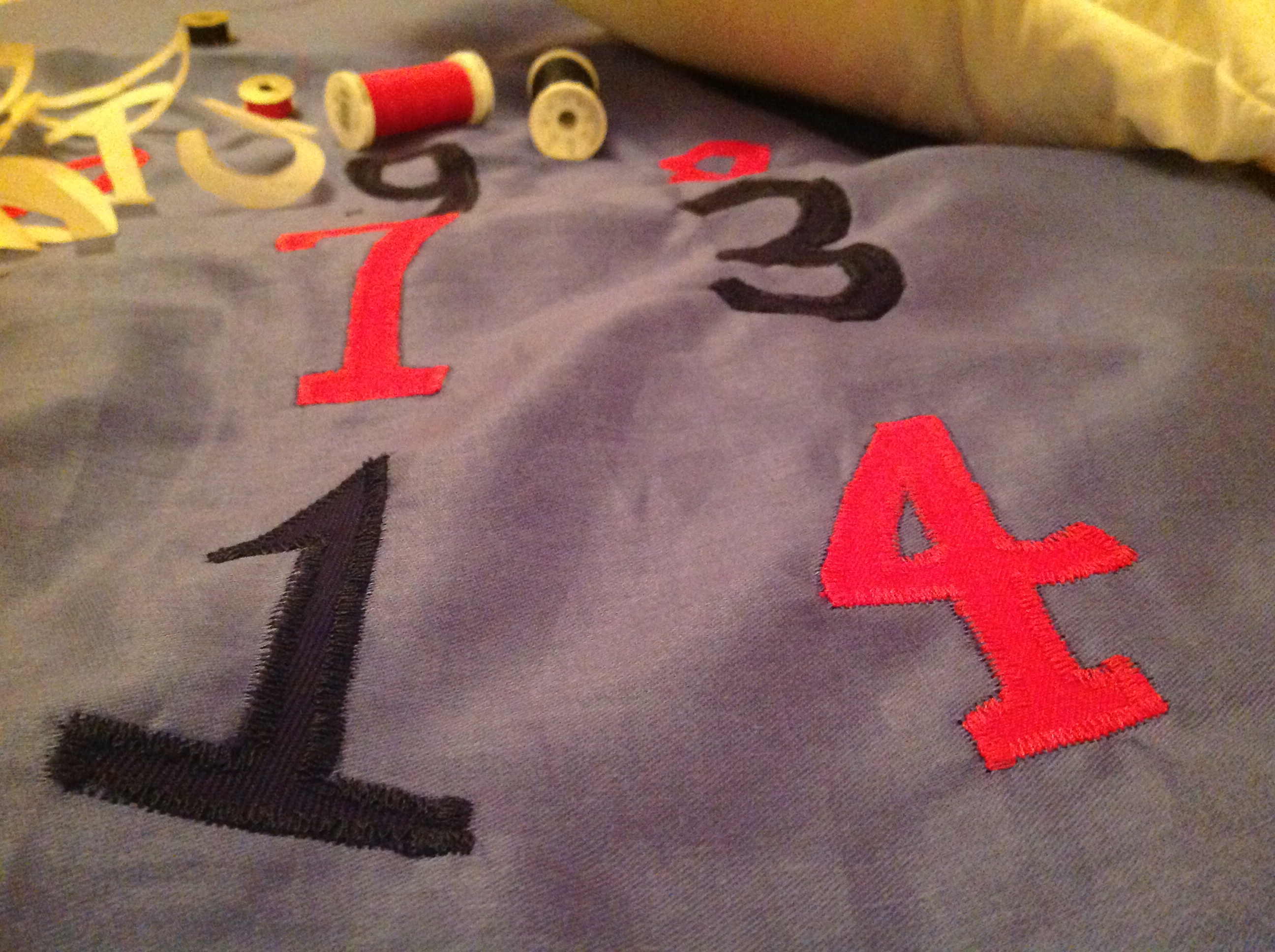
I have already taken on board this zip technique because over the weekend I needed to make my nine year old nephew a maths-inspired cushion for his bedroom. Before assembling the zip-linked panels I cut out a series of number templates based on images I found on the internet and used a wide zig-zag stitch to fix them to the front panel using the same colour cotton thread.

IMG_2361

Attaching numbers

A cushion, it seems, is no more tricky than a skirt; you just have to remember to open the zip before you sew the remaining three sides!

Now that’s done it’s time to tackle the padded cushions for the outside wooden chair – I keep putting this project off because I need to find an implement to cut through foam. Apparently an electric carving knife (used for cutting the Christmas turkey) works well. I will report back soon on that particular success (or failure)! SCH

Time to take stock

Time is ticking away. It’s almost six months since I left the Middle East and panic is finally setting in!

The contract on the house in France is due to be signed at the end of November with completion following shortly afterwards. However, until the house is officially mine it isn’t really possible to start the real business of seeking the relevant permissions for the B&B or developing marketing materials. I have researched long and hard and know what needs to be done but can’t actually put any of the theory into practice until the keys are firmly in my hands.

As the days draw in and we approach the end of October, I continue to sew, bake, garden, renovate and bargain hunt – important skills that need perfecting in advance of next year’s grand opening.

I have on my ‘to do’ list a few personal sewing projects that I put on hold over the summer because of the good weather; piped cushions for Mum’s outside Adirondack chair; a blue cushion with assorted numbers for my maths-mad nephew; and renovation of an old wooden stool that sat in Mum’s garage for thirty years until it was nominated ‘guinea pig’ for my recent upholstery course.

But right now I am sitting at another auction buying more items for The Little Grange. This particular auction is in a village hall, it is not very well known and only occurs once a month so everything is super cheap and items rarely achieve double figures!

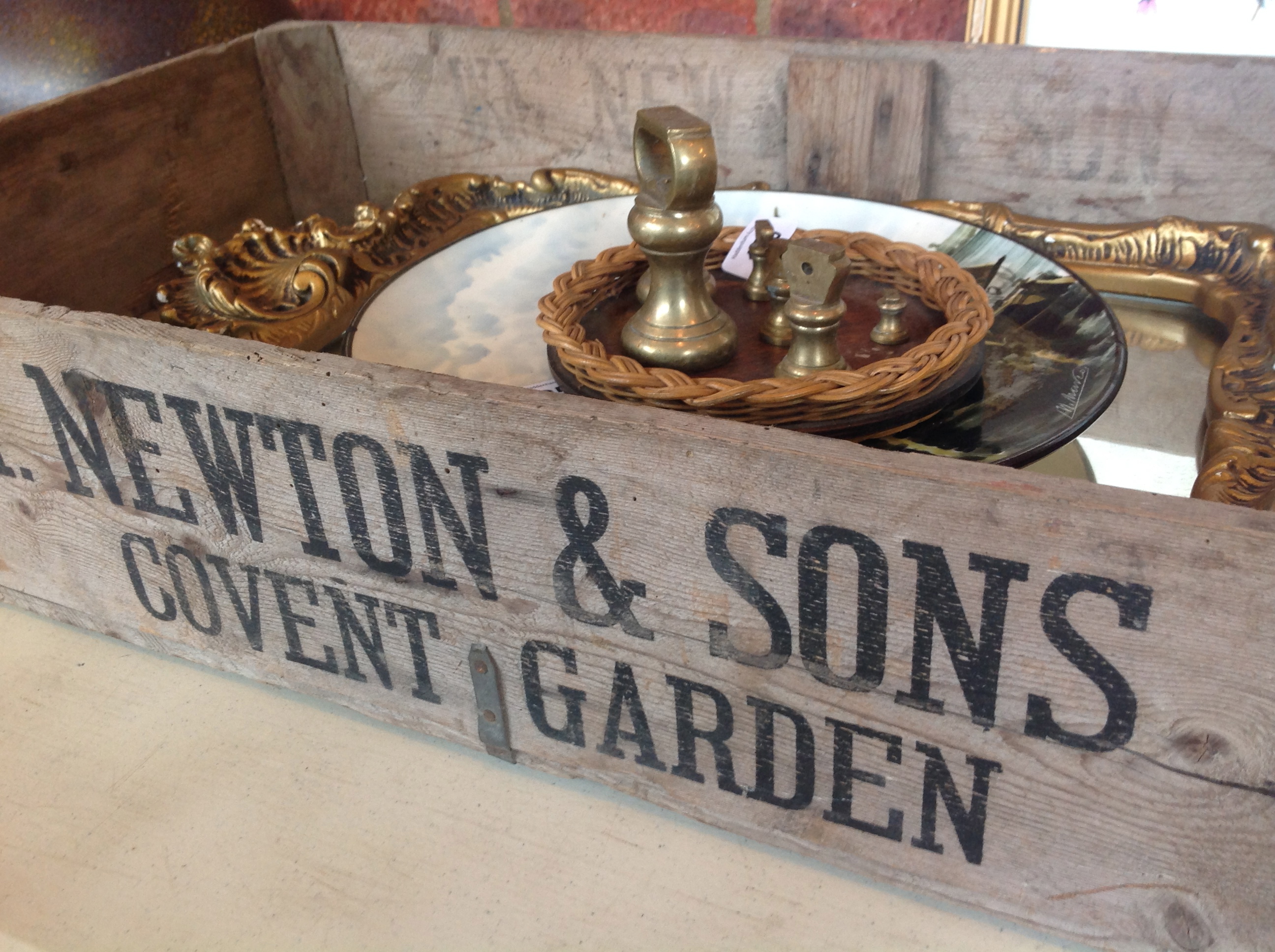
So far I have bought a large cloth folding screen (£22), vintage ‘Covent Garden’ wooden fruit tray (£10), an ornate gold mirror (£10), and a box of assorted tools including chisels that will be useful for upholstery projects (£20). The buyer’s premium is 18% so my total bill will be £73.16. SCH

IMG_2351 IMG_2319 IMG_2352 IMG_2317

Upholstery course: day one

Given my penchant for auction bargains, I have been really keen to learn the skills involved in furniture upholstery. I often see tired looking sofas, chairs, stools, etc. that have lovely forms but have seen better days; wishing I had the confidence to buy them and transform them into something incredible.

On Saturday I was given that chance at a local one day workshop. I was asked to take along a small project so chose a small stool with Queen Anne legs and a sprung seat. The fabric was long gone and the stool looked a sorry state so most of the day was spent removing tacks, mending the woodwork and bandaging the wood so it was ready to take more staples and tacks. Here are some photos from the day… there’s still a lot to do including seven more layers until the stool resembles the original. The final fabric seems to be incidental!

image  IMG_2218  image  IMG_2255  image  IMG_2261  image  IMG_2273

I now hope to attend a multi-week course so I can finish the stool and move onto other projects that may benefit The Little Grange. SCH

Piped cushions for an old wooden garden chair

I am planning a relatively straight forward upholstery project… fabric-covered foam cushions for an old wooden garden chair. The chair is Adirondack by design so I will need to take careful measurements to ensure the cushions fit snugly.  The covers will be made from a weighty cream patterned material and will be piped around the top and bottom edges.

To test how well the material performs I have just finished making two regular piped cushions which will probably end up on an inside chair/sofa rather than the completed garden chair, but it was good practice! Now… to those fabric-covered foam cushions… SCH

IMG_0753  IMG_0751  IMG_0742  IMG_0748